

Porsche Boxster 987 vs Volkswagen Golf 7 GTI : which one is faster?
0-100 km/h, 400 m, 1000 m, top speed — physics simulation calibrated on 7 measures.
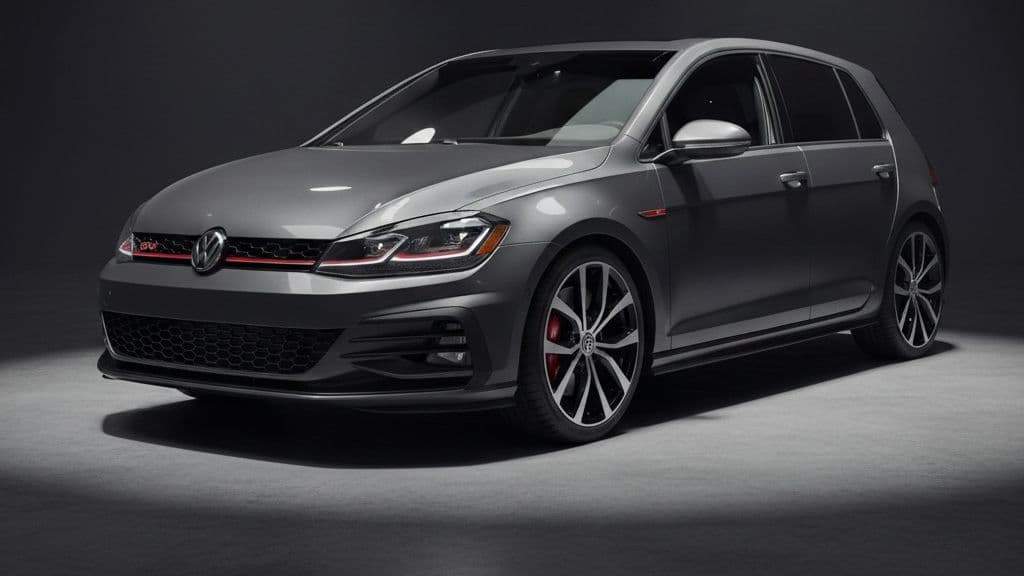
Simulation de performance
Race simulation at real speed
CONFIDENCE 90%Calibrated physics simulation: SCx via VMax, power curves, Crr via WLTP, drivetrain losses. Manufacturer 0-100 is the calibration target. Confidence 90 %.
Boxster vs Golf 7 GTI: chronicle of a drag race at 261 km/h
The launch: 0 to 100 km/h
Off the line, the Boxster hits 100 km/h in 5.71 s versus 6.49 s for the Golf 7 GTI. At this point, the Boxster leads by 0.78 s and sits roughly 14 m ahead.
From 100 km/h to 400 metres
At 200 metres, the Boxster is doing 134 km/h against 131 km/h for the Golf 7 GTI. The gap is 0.61 s. The challenger starts to claw back ground.
At 400 metres standing start, the Boxster crosses the line in 13.88 s versus 14.62 s. The 0.74 s gap represents roughly 33 m of track — a gap visible to the naked eye.
Beyond 400 metres: top speed comes into play
Past 400 metres, the Boxster continues to build its lead. At 600 metres, it runs at 189 km/h versus 183 km/h. At 1,000 metres, the Boxster finishes in 25.03 s versus 26.13 s, with a 1.11 s lead.
What the numbers don’t tell you
Both rivals are electronically governed, but not at the same level: the Boxster is capped at 261 km/h, the Golf 7 GTI at 246 km/h. This isn’t a physical engine limit — it’s a manufacturer choice, usually for tyre safety or homologation reasons. Neither car reaches its true aerodynamic top speed.
With two combustion powertrains, the difference comes down to power-to-weight ratio (5.27 kg/hp vs 6.30 kg/hp) and transmission (Automatic vs Automatic).
In European road use (130 km/h max), both vehicles reach the legal speed limit in under 9.62 seconds. The 0.78 s difference in 0 to 100 km/h is mostly felt in motorway merging and overtaking.
Porsche Boxster has a clear edge over the Volkswagen Golf 7 GTI to 100 km/h. This difference is clearly noticeable in spirited driving and widens on standing starts.