

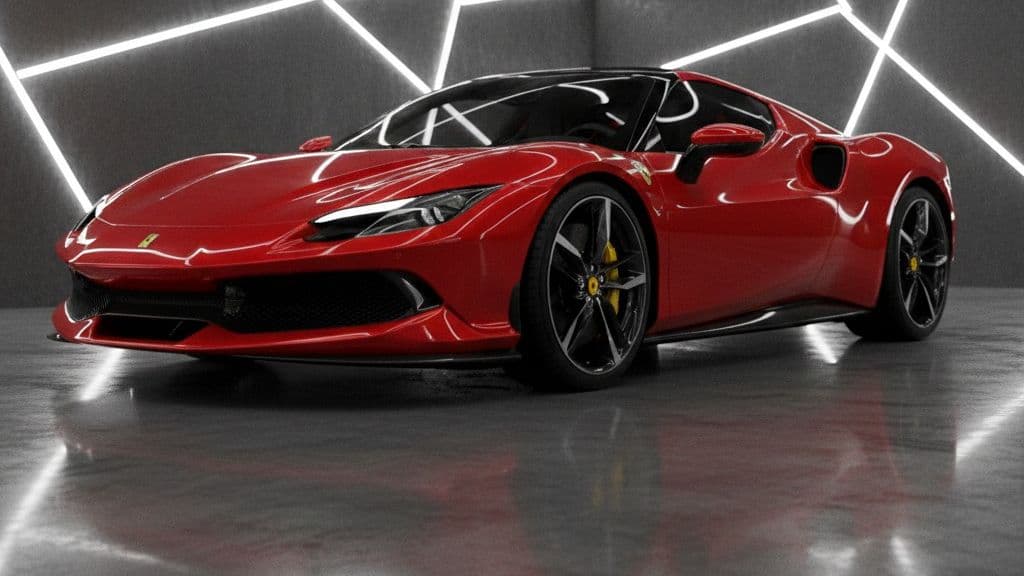
Ferrari 296 GTB vs BYD Tang EV AWD 380kW : which one is faster?
0-100 km/h, 400 m, 1000 m, top speed — physics simulation calibrated on 7 measures.
 400 m
400 mSimulation de performance
Race simulation at real speed
CONFIDENCE 94%Calibrated physics simulation: SCx via VMax, power curves, Crr via WLTP, drivetrain losses. Manufacturer 0-100 is the calibration target. Confidence 94 %.
296 GTB vs Tang EV AWD 380kW: chronicle of a drag race at 338 km/h
The launch: 0 to 100 km/h
Off the line, the 296 GTB hits 100 km/h in 2.94 s versus 4.39 s for the Tang EV AWD 380kW. Despite lacking instant torque, 620 hp of power compensates. At this point, the 296 GTB leads by 1.45 s and sits roughly 12 m ahead.
From 100 km/h to 400 metres
At 200 metres, the 296 GTB is doing 184 km/h against 147 km/h for the Tang EV AWD 380kW. The gap is 1.44 s. The gap remains stable from the start.
At 400 metres standing start, the 296 GTB crosses the line in 10.30 s versus 12.64 s. The 2.34 s gap represents roughly 112 m of track — a gap visible to the naked eye.
Beyond 400 metres: top speed comes into play
Past 400 metres, the 296 GTB continues to build its lead. At 600 metres, it runs at 255 km/h versus 180 km/h. At 1,000 metres, the 296 GTB finishes in 18.57 s versus 24.64 s, with a 6.07 s lead.
What the numbers don’t tell you
Electronically capped at 180 km/h, the Tang EV AWD 380kW never reaches its natural aerodynamic ceiling in this duel. That’s not a physical limit of the motor — it’s a deliberate manufacturer decision, typically tied to standard-fit tyre ratings or model-range positioning.
Instant electric torque gives an advantage off the line. The higher top speed of the combustion engine gives an advantage over longer distances. The distance at which one catches the other depends on the top speed differential.
In European road use (130 km/h max), both vehicles reach the legal speed limit in under 6.58 seconds. The 1.45 s difference in 0 to 100 km/h is mostly felt in motorway merging and overtaking.
Ferrari 296 GTB has a clear edge over the BYD Tang EV AWD 380kW to 100 km/h. This difference is clearly noticeable in spirited driving and widens on standing starts.