

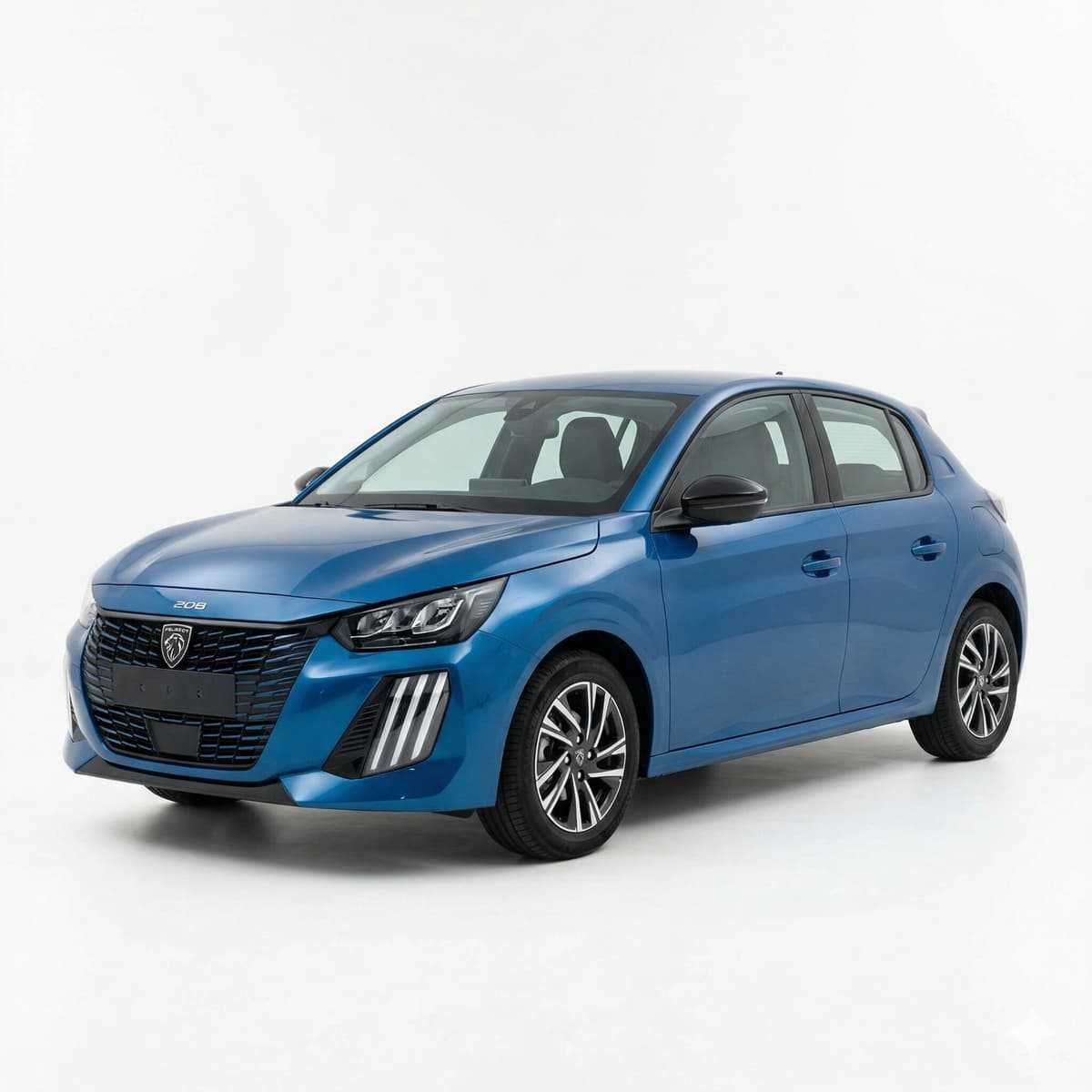
Ford Puma EcoBoost 125 vs Peugeot 208 Hybrid 110 e-DCS6 : which one is faster?
0-100 km/h, 400 m, 1000 m, top speed — physics simulation calibrated on 7 measures.
 VMax
VMaxSimulation de performance
Race simulation at real speed
CONFIDENCE 99%Reading the duel
At 400 m, Ford Puma EcoBoost 125 leads by 0.04 s. At 1 000 m, Peugeot 208 Hybrid 110 e-DCS6 takes the lead by 0.21 s.
Calibrated physics simulation: SCx via VMax, power curves, Crr via WLTP, drivetrain losses. Manufacturer 0-100 is the calibration target. Confidence 99 %.
Puma EcoBoost 125 vs 208 Hybrid 110 e-DCS6: chronicle of a drag race at 194 km/h
The launch: 0 to 100 km/h
Off the line, the Puma EcoBoost 125 hits 100 km/h in 9.92 s versus 9.99 s for the 208 Hybrid 110 e-DCS6. The 0.07 s gap is negligible: both vehicles are neck and neck.
From 100 km/h to 400 metres
At 200 metres, the Puma EcoBoost 125 is doing 107 km/h against 108 km/h for the 208 Hybrid 110 e-DCS6. The gap is 0.11 s. The gap remains stable from the start.
At 400 metres standing start, the Puma EcoBoost 125 crosses the line in 17.29 s versus 17.33 s. The 0.04 s gap represents roughly 2 m of track
Beyond 400 metres: top speed comes into play
Past 400 metres, the situation changes. The Puma EcoBoost 125 maxes out at 184 km/h while the 208 Hybrid 110 e-DCS6 keeps accelerating towards 194 km/h. At 600 metres, the gap has dropped to 0.05 s.
Around 482 metres, both vehicles are level. This is the inversion point: the 208 Hybrid 110 e-DCS6 overcomes its launch deficit thanks to a 10 km/h higher top speed.
At 1,000 metres, the 208 Hybrid 110 e-DCS6 finishes in 31.57 s versus 31.78 s. The 0.21 s delta shows an extremely tight race.
What the numbers don’t tell you
With two combustion powertrains, the difference comes down to power-to-weight ratio (9.82 kg/hp vs 10.68 kg/hp) and transmission (Automatic vs Automatic).
In European road use (130 km/h max), both vehicles reach the legal speed limit in under 16.89 seconds. The 0.07 s difference in 0 to 100 km/h is mostly felt in motorway merging and overtaking.
Ford Puma EcoBoost 125 and Peugeot 208 Hybrid 110 e-DCS6 are virtually tied to 100 km/h. The gap is under a tenth of a second — only the physics engine can settle it step by step.